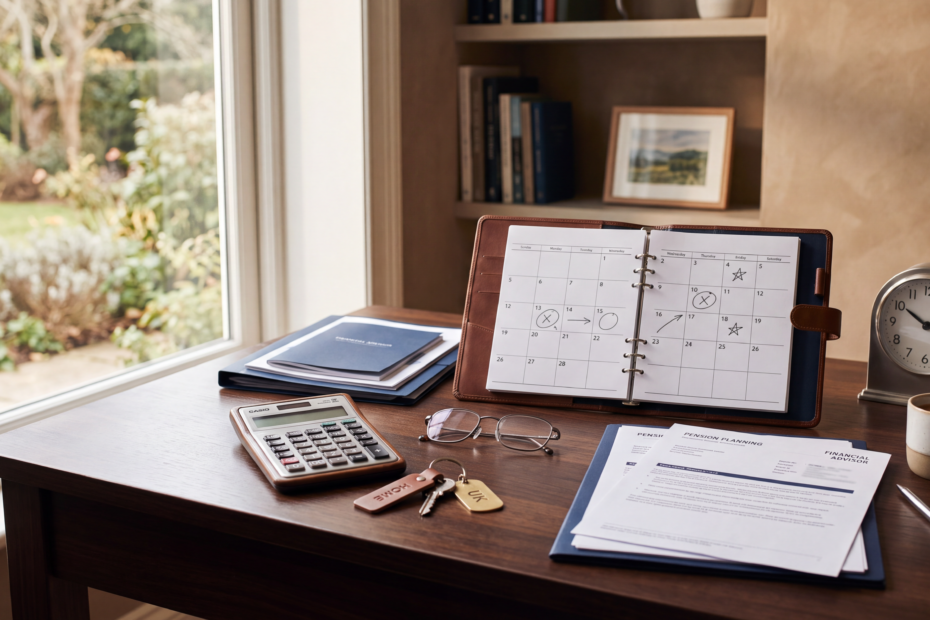
Deciding when to retire is one of the biggest financial and lifestyle decisions you may make.
Some people dream of retiring as soon as possible. Others prefer to continue working for a few more years because they enjoy their job, want to build up their pension or simply want greater financial security.
There is no single best time to retire for everyone. The right decision depends on your finances, health, work situation, family circumstances and the lifestyle you want in later life.
Start With Your State Pension Age
One of the first things to check is your State Pension age.
🛡️ Worried About Losing Your Home to Care Fees?
Many UK homeowners don’t realise their property can be used to pay for care fees. Get free advice before a crisis hits and protect what you’ve worked your whole life for.
Request Your Free Estate Planning ReviewYour State Pension age is the earliest age at which you can normally start receiving your State Pension. It is not necessarily the same as the age at which you can access a workplace or personal pension.
The State Pension age is currently increasing from 66 to 67 between 2026 and 2028, depending on your date of birth.
Before deciding when to stop working, check your individual State Pension age rather than relying on assumptions.
You Do Not Have to Retire When You Reach State Pension Age
Reaching State Pension age does not mean you have to stop working.
You can continue working if you want to, and some people choose to do so for several reasons.
Working for longer could give you additional employment income while allowing your private or workplace pension savings to remain invested for longer.
You may also continue working because you enjoy your career or want to maintain the social contact and routine that employment provides.
Think About Your Workplace and Personal Pensions
Your private and workplace pensions are another important part of the decision.
Before retiring, find out how much you have saved and what income your pension arrangements could potentially provide.
If you have several pension pots, make sure you understand the options available with each one.
Do not assume that taking everything at once is automatically the best choice. Pension withdrawals can have tax and long-term financial consequences.
If you are unsure, consider speaking to a regulated financial adviser before making major pension decisions.
Consider Your Current Spending
A retirement decision should be based on more than the size of your pension pot.
Think about how much you actually spend each month.
List your essential costs, including:
- Mortgage or rent
- Energy bills
- Food
- Insurance
- Transport
- Council Tax
- Home maintenance
- Debt repayments
Then consider the lifestyle costs you would like to have in retirement, such as holidays, hobbies, eating out and helping family members.
This can give you a much clearer idea of how much income you are likely to need.
Could Working Longer Improve Your Position?
For some people, delaying retirement could improve their financial position.
An additional year or two of employment may allow you to earn more, save more and potentially reduce the amount of time your retirement savings need to support you.
You may also decide to delay claiming your State Pension. Deferring your State Pension can increase the amount you receive when you eventually claim, although the rules and financial implications should be considered carefully.
Working longer is not automatically the right answer, however. Your health, job satisfaction and personal priorities matter too.
Think About Your Health
Financial planning is important, but so is your quality of life.
If your job is physically demanding, stressful or affecting your wellbeing, continuing to work simply to increase your pension may not be the best decision.
On the other hand, if you enjoy your work and remain healthy, continuing for a few more years may be perfectly reasonable.
Think honestly about how you feel about your work and what you want your later years to look like.
Consider a Gradual Retirement
Retirement does not always have to be an all-or-nothing decision.
Some employers may offer opportunities for flexible working, reduced hours or phased retirement.
Moving from full-time employment to part-time work can provide additional income while giving you more free time.
It may also make the psychological transition into retirement easier because you can gradually adjust to having more control over your time.
Think About Your Partner and Family
Your retirement decision can also affect the people closest to you.
If you have a partner, consider whether you want to retire at the same time or at different points.
Your household income, mortgage, family responsibilities and plans for travel or other activities may all influence the decision.
It is worth having an honest conversation about what both of you expect retirement to look like.
Do Not Forget About Later-Life Care
When deciding when to retire, it is easy to focus only on the next five or ten years.
However, retirement planning should also consider what could happen later.
You may eventually need additional support at home or residential care. The cost of care and how it could affect your assets are important parts of wider later-life planning.
You do not need to predict exactly what will happen, but understanding the potential financial implications can help you make better decisions today.
Make Sure Your Estate Planning Is Up to Date
Retirement is also a good opportunity to review your wider estate planning.
Check that your Will reflects your current wishes and consider whether your Lasting Powers of Attorney are in place.
You may also want to review how your savings, property and other assets fit into your plans for your family.
These decisions are not only about what happens when you die. Good later-life planning can also help you prepare for situations where you may need someone else to make decisions on your behalf.
So, When Is the Best Time to Retire?
There is no magic retirement age that works for everyone.
For one person, retiring at 60 may be the right choice. Another person may prefer to continue working until 67, 70 or beyond.
The best time to retire is usually the point at which your finances, health, personal circumstances and desired lifestyle come together.
Before making the decision, check your State Pension position, understand your other pension arrangements, calculate your likely spending and think about what you want your retirement to look like.
Retirement should not simply be about stopping work. It should be about moving into the next stage of life with a plan that gives you confidence and flexibility.