Skip to content
Home » News » The Social Care Loophole Politicians Don’t Want You to Notice

The Social Care Loophole Politicians Don’t Want You to Notice

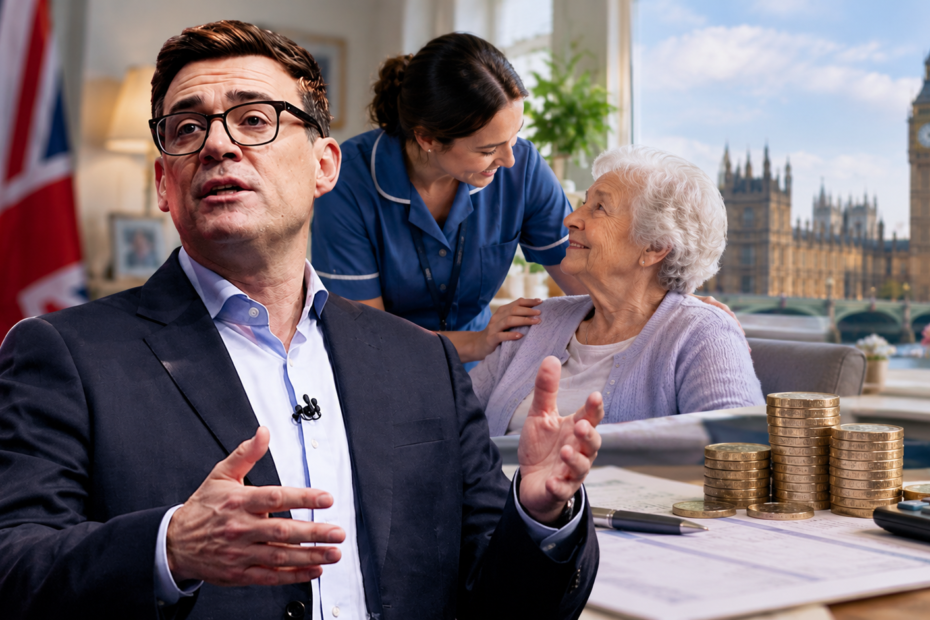
Andy Burnham discussing free personal care and remaining care home costs

Andy Burnham says personal care will be free. But what about the thousands of pounds a week that a care home can still cost?

There is something about the latest social-care announcement that UK homeowners need to look beyond.

Andy Burnham says personal care will be free.

It sounds fantastic.

🛡️ Worried About Losing Your Home to Care Fees?

Many UK homeowners don’t realise their property can be used to pay for care fees. Get free advice before a crisis hits and protect what you’ve worked your whole life for.

Request Your Free Estate Planning Review

It sounds as though the huge financial worry surrounding care has finally been solved.

But there is a problem with the language.

“Free personal care” does not mean “free care home.”

And Scotland has already shown us how this works.

The Scottish Model Already Does This

Scotland has provided free personal care for years.

But if someone needs to move into a care home, the personal and nursing care element can be funded while the person still has to contribute towards the residential part of the bill — their accommodation and living costs.

According to analysis from the Nuffield Trust, people in Scottish residential care can still face costs of around £1,160 a week, rising to around £1,410 a week in nursing homes.

Some people with higher needs can face bills of more than £2,000 a week.

That is potentially more than £100,000 a year.

So when politicians say:

“Care will be free.”

The question homeowners need to ask is:

“Which part of the care will actually be free?”

Is This the Political Loophole?

This is where the language becomes important.

Andy Burnham’s announcement talks about a new National Care Service and free personal care for older people.

But the government’s own announcement makes clear that the service will not cover “bed and board” in a care home.

Existing means-tested contributions towards those costs will remain.

So the headline sounds very different from the reality.

The nurse or carer providing personal care may be funded.

But the person still needs somewhere to live.

They still need their room, food, heating, accommodation and the other costs associated with living in a residential care setting.

Those costs don’t simply disappear because personal care is free.

So What Happens to the Homeowner?

This is the part homeowners should be paying attention to.

Imagine someone develops dementia and eventually needs permanent residential care.

Their personal care could be funded.

But they could still have a substantial residential bill.

If that bill runs into hundreds or even thousands of pounds every week, who pays it?

And if the person cannot afford it from their income and savings, what assets are taken into account?

For many homeowners, the obvious question is:

“What happens to my house?”

The government has said that the proposed service is intended to protect people’s homes and savings.

But it has also explicitly said that the new service will not cover bed and board.

That is why homeowners need to look beyond the headline.

And Then There Is the Question of the Cap

Here’s where the latest news becomes even more interesting.

If personal care is going to be free, why are we still talking about introducing a lifetime cap on care costs?

The answer appears to be that a free personal-care system does not necessarily protect people from the potentially enormous costs that remain outside that definition.

A lifetime cap could potentially limit how much someone has to pay.

But there is currently no confirmed figure for what that cap would be.

So homeowners are left asking:

“If care is free, what exactly needs capping?”

And:

“What costs will count towards the cap?”

Until those questions are answered, the words “free care” don’t tell homeowners enough.

Don't Be Distracted by the Headline

This isn’t about whether free personal care is a good idea.

Of course, helping people who need care is important.

The issue is what happens to the costs that aren’t included.

Because when somebody needs residential care, they don’t just need a nurse.

They need a place to live.

And that residential element can be extremely expensive.

The Nuffield Trust has already raised concerns about the distinction between free personal care and the wider costs of residential care.

If the aim is genuinely to protect people’s homes and savings, homeowners need to know exactly how those remaining costs will be dealt with.

The Question Homeowners Should Be Asking

Don’t simply ask:

“Is care going to be free?”

Ask:

“Exactly what is free?”

“What will I still have to pay?”

“Will those costs be capped?”

And most importantly:

“Could my home still be affected if I need residential care?”

Because until the detailed rules are published, the headline “free care” does not necessarily mean that the financial risk to homeowners has disappeared.

The social-care system is changing.

But the details matter.

And if you own a home, waiting until you or a loved one actually needs care may be the worst time to discover what the system really means.

Want to Know Where You Stand?

The rules around care fees are complicated, and the proposed changes do not necessarily mean that your home is automatically protected.

If you own a home and are concerned about what could happen if you or your partner ever need residential care, you can request a call with the Later Living Helpline team.

We can explain the current care-fee rules, answer your questions and, where appropriate, help you understand what options may be available to protect your home and savings.

There is no obligation and no pressure to proceed with anything.

If you would like to speak to someone, simply complete the short form below and request a call.

Read what happened Imagine being in your eighties and suddenly finding that your children can no longer help you manage your own …
Dementia meant she needed care. What happened next is a story every homeowner should know. Imagine owning your own home for decades. …
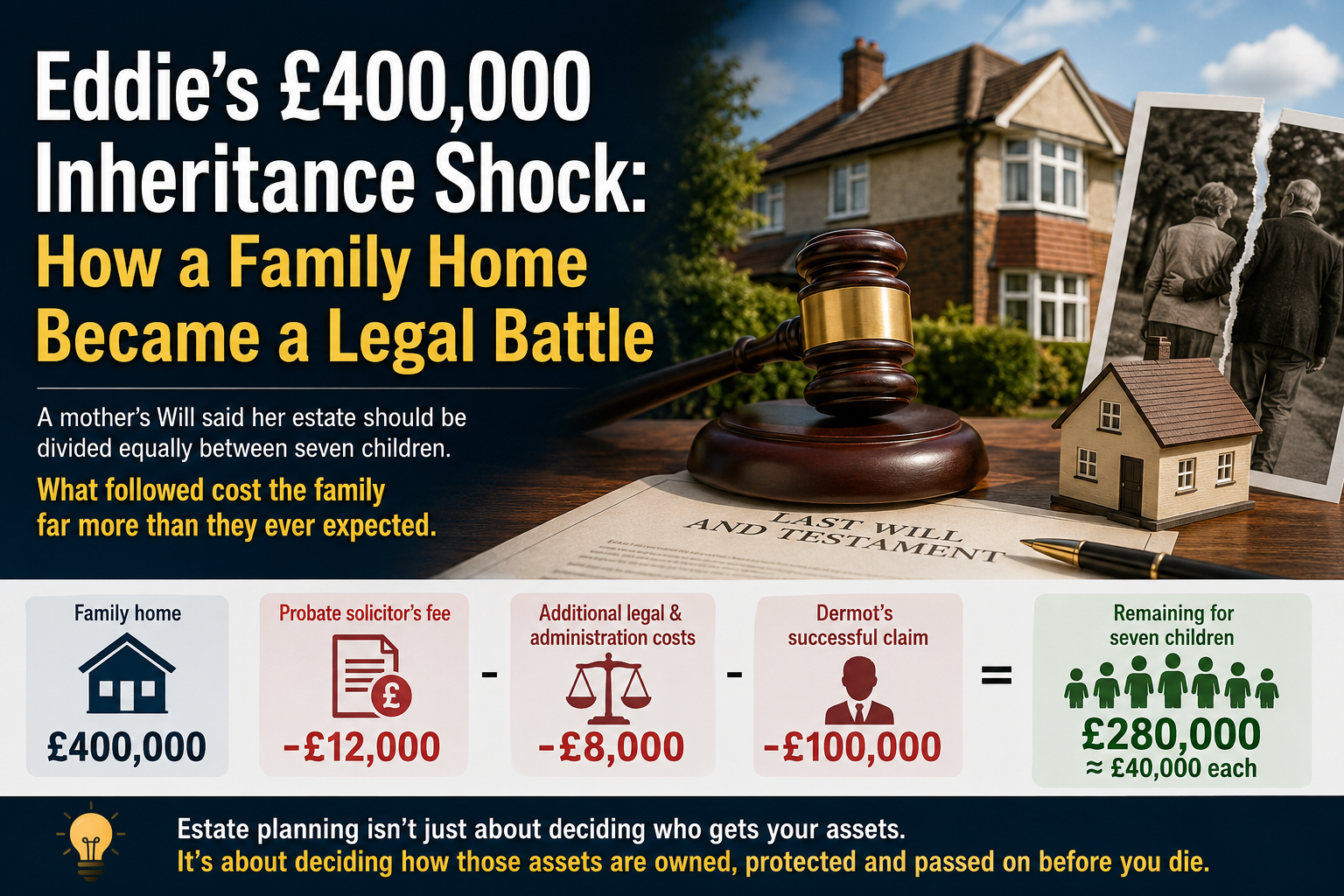
When Eddie Winn’s mother died, he thought her wishes were perfectly clear. Mary had left a Will stating that her estate should …
Roy and Shirley Sharp. David Mosley. Kath Pearson. Three families. Three heartbreaking stories. One common theme. All found themselves facing the devastating …

A Son’s Story of Dementia, Loss, and a System That Took It All My dad, David Scott, is 62 years old. If …

When a parent first needs care, most families assume one thing: That the NHS will take care of it. It seems logical. …