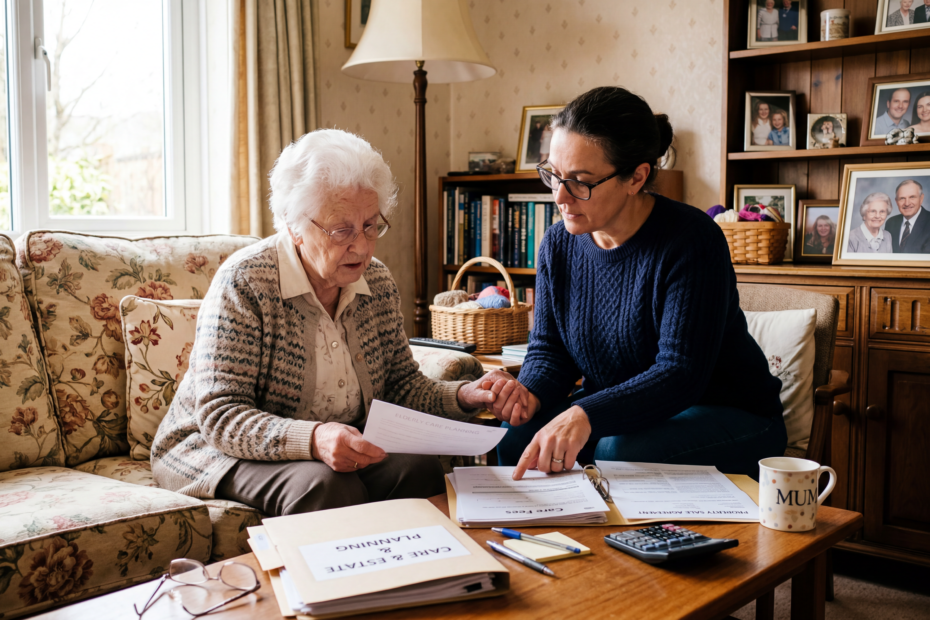
When my mum first needed long-term care, we assumed the local authority would help with the costs. Like many families, we believed that because she had worked hard all her life and paid taxes for decades, support would be available when she needed it most.
What we did not realise was that the value of her home could be taken into account when assessing how much she would have to contribute towards her care.
Eventually, her house had to be sold to help cover the cost of residential care. Looking back, there are many things we wish we had understood sooner.
If your family is facing a similar situation, here are some important lessons that could help you make informed decisions.
🛡️ Worried About Losing Your Home to Care Fees?
Many UK homeowners don’t realise their property can be used to pay for care fees. Get free advice before a crisis hits and protect what you’ve worked your whole life for.
Request Your Free Estate Planning ReviewUnderstanding How Care Fees Are Assessed
One of the biggest surprises for us was learning how the financial assessment process works.
Before a local authority contributes towards care costs, they usually carry out a means test. This assessment looks at a person’s income, savings, investments, and, in some cases, their property.
The outcome determines how much the individual must contribute towards their own care.
Many families assume the government will automatically pay for care. Unfortunately, this is not always the case.
If someone has assets above the relevant thresholds, they may be expected to pay some or all of their care costs themselves.
When Does a Home Count Towards Care Fees?
A person’s home is not always included in the financial assessment.
For example, the property may be disregarded if it is still occupied by:
- A spouse or civil partner
- A dependent child
- A qualifying relative in certain circumstances
However, when a person moves permanently into residential care and no qualifying person remains living in the property, the home may be included as part of the assessment.
This was the point when our family realised that Mum’s home could become a major factor in funding her care.
The Emotional Impact of Selling a Family Home
For many people, a home is more than just a financial asset.
It holds decades of memories, family milestones, and personal history.
The decision to sell can therefore be emotionally difficult.
We spent years celebrating birthdays, Christmases, and family gatherings in Mum’s home. The thought of selling it felt like losing another part of her independence.
Many families underestimate how emotionally challenging this process can be.
Having honest conversations early can make a significant difference when difficult decisions eventually need to be made.
We Assumed We Had Plenty of Time
One mistake we made was delaying important conversations.
Nobody likes discussing care needs, loss of independence, or future health problems.
As a result, we kept putting off discussions about finances and long-term planning.
The reality is that care needs can arise unexpectedly.
An accident, illness, or sudden decline in health can change everything very quickly.
Planning early often gives families more options and more time to understand the choices available.
The Importance of Lasting Power of Attorney
Another lesson we learned was the value of having a Lasting Power of Attorney in place.
Without one, managing a loved one’s financial affairs can become far more complicated if they lose mental capacity.
A Lasting Power of Attorney allows someone you trust to make decisions on your behalf if you are unable to do so yourself.
Having these arrangements in place before they are needed can save families considerable stress and expense.
We Didn't Fully Understand the Rules
There is a great deal of misinformation surrounding care fees and property ownership.
Over the years, we heard many claims such as:
- “The council can never touch your home.”
- “Just give the house to your children.”
- “Putting the property in someone else’s name solves the problem.”
In reality, the rules are often more complex.
Actions taken solely to avoid care fees may be challenged by local authorities under deprivation of assets rules.
This is why professional advice is so important.
Making decisions based on myths or hearsay can create problems later.
Why Estate Planning Matters
One of the biggest lessons from our experience is that estate planning is not just about what happens after death.
Good planning can also help families prepare for challenges during later life.
A comprehensive estate plan may include:
- A professionally drafted will
- Lasting Powers of Attorney
- Trust planning where appropriate
- Guidance on inheritance and asset protection
- Discussions about future care needs
The earlier these conversations happen, the more options may be available.
Talking About Care Before It Becomes Urgent
Many families avoid discussing care because it feels uncomfortable.
We certainly did.
Looking back, those conversations would have been much easier before the situation became urgent.
Discussing questions such as these can help:
Where would you prefer to receive care?
Some people wish to remain at home for as long as possible.
Others may prefer specialist residential care if needed.
Who would make decisions if you could not?
Ensuring trusted individuals are legally authorised to act can avoid future complications.
Have your legal documents been updated?
Regular reviews can help ensure wills and Powers of Attorney remain suitable for changing circumstances.
Could We Have Done Anything Differently?
This is a question many families ask.
Every situation is unique, and there is rarely a simple answer.
However, there is one thing we would definitely have done differently.
We would have sought advice much earlier.
Understanding the rules before a crisis develops allows families to make informed decisions and avoid unnecessary confusion.
While planning cannot prevent every challenge, it can provide greater certainty and peace of mind.
Final Thoughts
Watching my mum sell her home to help fund her care was one of the most difficult experiences our family faced.
The financial impact was significant, but the emotional impact was even greater.
What I wish we had known is that planning early matters. Understanding the rules matters. Having the right legal documents in place matters.
Most importantly, having open conversations before care becomes necessary can help families navigate difficult decisions with greater confidence.
No one can predict the future. However, taking steps today may help protect your wishes and provide reassurance for the people you love tomorrow.