
Skip to content
Home » News » Inheritance Tax Threshold Increase Allows Couples to Pass on Up to £950,000 Tax-Free

Inheritance Tax Threshold Increase Allows Couples to Pass on Up to £950,000 Tax-Free

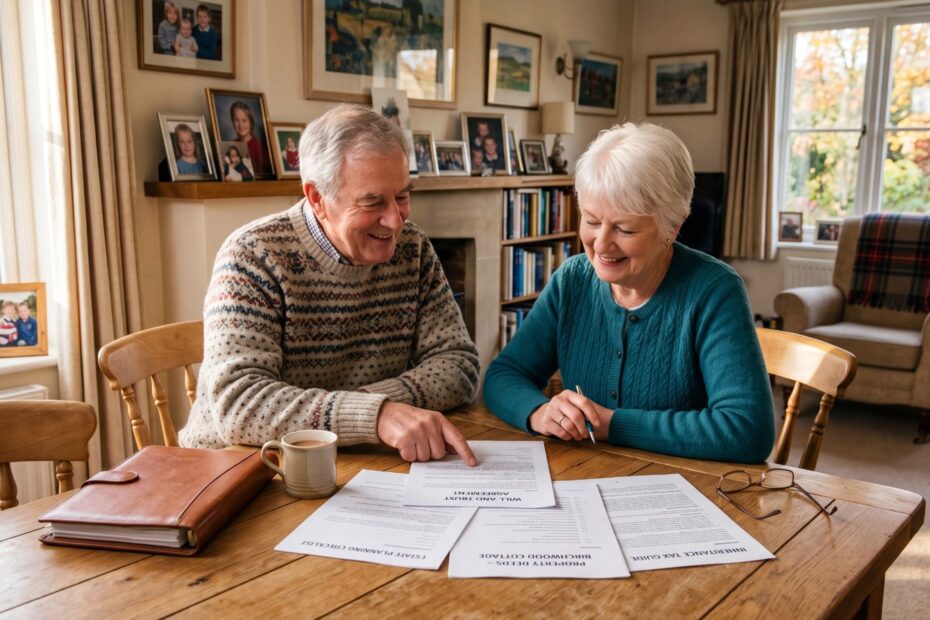
Older couple reviewing estate planning and inheritance documents while discussing passing their family home to future generations.

Families looking to pass on wealth to future generations received a significant boost with the increase in the inheritance tax threshold.

The changes mean that married couples and civil partners can leave up to £950,000 tax-free to their children or grandchildren, helping more families protect their assets and reduce potential inheritance tax liabilities.

Understanding how these allowances work is an important part of effective estate planning and can help families preserve more of their wealth for future generations.

What Is Inheritance Tax?

Inheritance Tax (IHT) is a tax charged on the value of a person’s estate when they die.

🛡️ Worried About Losing Your Home to Care Fees?

Many UK homeowners don’t realise their property can be used to pay for care fees. Get free advice before a crisis hits and protect what you’ve worked your whole life for.

Request Your Free Estate Planning Review

An estate can include:

Property and land
Savings and investments
Personal possessions
Business interests
Other valuable assets

In many cases, inheritance tax is charged at 40% on the value of an estate that exceeds the available tax-free allowances.

Careful planning can help reduce the amount of tax payable and maximise what beneficiaries receive.
Understanding the Inheritance Tax Allowance

The inheritance tax allowance consists of two key parts.

he Standard Nil-Rate Band

Every individual has a basic inheritance tax allowance of £325,000.

This allowance can be used against the value of their estate before inheritance tax becomes payable.

For married couples and civil partners, any unused allowance can usually be transferred to the surviving spouse, potentially doubling the available threshold.

The Residence Nil-Rate Band

An additional allowance is available when a person leaves their main residence to direct descendants, such as:

Children
Stepchildren
Adopted children
Grandchildren

This allowance is known as the Residence Nil-Rate Band.

The increase in this allowance raised the total amount an individual could pass on tax-free to £475,000.

For married couples and civil partners, this created a combined inheritance tax threshold of £950,000.

How the Threshold Increased

The Residence Nil-Rate Band was gradually introduced to help families pass on the family home without facing substantial inheritance tax bills.

The allowance increased as follows:

Tax Year Individual Allowance Couple’s Allowance
2018/19 £450,000 £900,000
2019/20 £475,000 £950,000
2020/21 £500,000 £1,000,000

As a result, by 2020/21, eligible couples could potentially pass on up to £1 million tax-free.

Who Qualifies for the Additional Allowance?

The Residence Nil-Rate Band generally applies when:

You own a qualifying residential property.
The property is passed to a direct descendant.
The estate falls within the relevant eligibility rules.

For many homeowners, this additional allowance can significantly reduce or even eliminate inheritance tax liability.

However, larger estates may be subject to additional rules and restrictions, making professional estate planning particularly important.

Why Estate Planning Matters

While the increased inheritance tax thresholds provide valuable opportunities, many families still fail to take full advantage of available allowances.

Proper estate planning can help:

Protect family wealth
Reduce inheritance tax exposure
Ensure assets pass according to your wishes
Simplify matters for loved ones
Preserve more of the family home for future generations

Without planning, beneficiaries may face unnecessary tax liabilities and delays during the administration of an estate.

Protecting Your Family's Future

For homeowners, the family property is often their most valuable asset. Understanding how inheritance tax thresholds work can play a vital role in preserving that wealth for children and grandchildren.

As inheritance tax rules continue to evolve, reviewing your estate plan regularly can help ensure your arrangements remain effective and tax-efficient.

Seeking professional guidance can provide peace of mind and help your family make the most of the available allowances while protecting the legacy you wish to leave behind.

Many people are unaware that the NHS may fully fund their care if they have significant ongoing health needs. Known as NHS …

Families looking to pass on wealth to future generations received a significant boost with the increase in the inheritance tax threshold. The …

Many grandparents regularly help care for grandchildren while parents are at work. What many people don’t realise is that this support could …

Many people assume that getting a mortgage becomes impossible once they approach retirement. In reality, there are several borrowing options available for …

A major review into social care funding has recommended introducing a £35,000 lifetime cap on elderly care costs, helping to protect older …

Experts have raised serious concerns about the future of elderly care funding, warning that many older people could face financial hardship and …