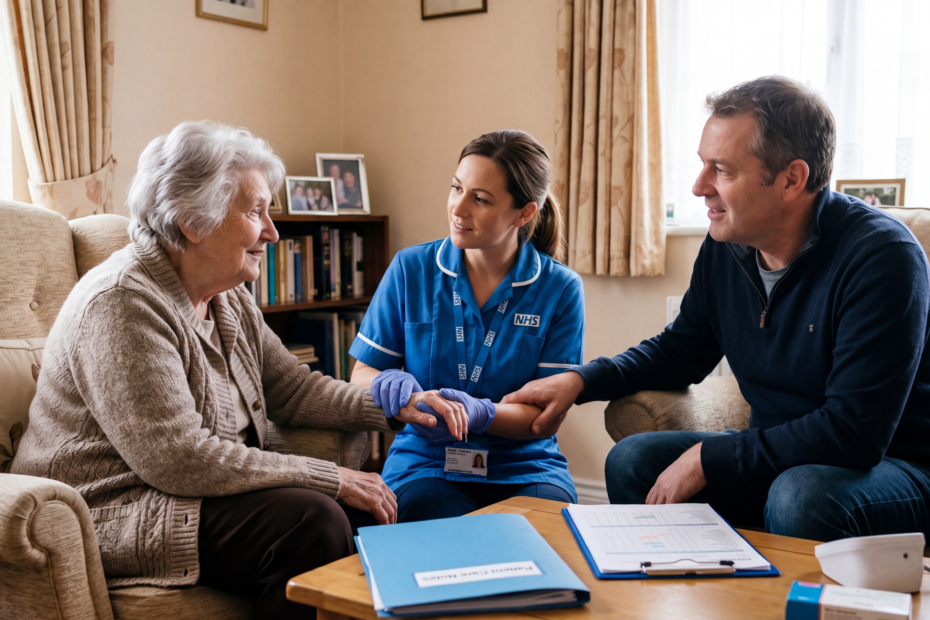
Many people are unaware that the NHS may fully fund their care if they have significant ongoing health needs.
Known as NHS Continuing Healthcare (CHC), this funding can cover the full cost of care for eligible adults, whether they receive support at home, in a care home, or in another appropriate setting.
Because the eligibility criteria are strict, many families assume they will not qualify. However, understanding the assessment process and knowing your rights can help ensure you receive the support you may be entitled to.
What Is NHS Continuing Healthcare?
NHS Continuing Healthcare is a package of care that is arranged and funded entirely by the NHS for adults aged 18 and over who have complex, long-term health needs.
🛡️ Worried About Losing Your Home to Care Fees?
Many UK homeowners don’t realise their property can be used to pay for care fees. Get free advice before a crisis hits and protect what you’ve worked your whole life for.
Request Your Free Estate Planning ReviewUnlike local authority social care, NHS Continuing Healthcare is:
- Not means-tested
- Not affected by your savings or assets
- Fully funded by the NHS if eligible
The funding can cover a wide range of care needs, including:
- Personal care and washing
- Assistance with dressing
- Mobility support
- Medication management
- Specialist nursing care
- Ongoing healthcare support
Who May Be Eligible?
Eligibility is based on whether an individual has what is known as a “primary health need.”
This means their care requirements are primarily healthcare-related rather than social care needs alone.
People may be considered for NHS Continuing Healthcare if their needs arise from:
- Serious illness
- Disability
- Complex medical conditions
- Significant physical impairment
- Progressive neurological conditions
- Severe cognitive impairment
Eligibility is assessed individually and depends on the nature, intensity, complexity, and unpredictability of a person’s care needs.
How the Assessment Process Works
There are usually two stages to the assessment process.
Stage One: Initial Checklist Assessment
The first stage involves a screening assessment carried out by a healthcare or social care professional.
The assessment considers several areas of need and determines whether a full assessment should take place.
A referral for a full assessment does not automatically mean funding will be awarded, but it does indicate that further investigation is required.
Stage Two: Full Assessment
A multidisciplinary team of healthcare and social care professionals conducts a detailed assessment.
The team reviews:
- Medical records
- Care assessments
- Professional reports
- Risk assessments
- Current care requirements
Needs are assessed across multiple care areas, including:
- Breathing
- Nutrition
- Mobility
- Communication
- Behaviour
- Cognition
- Continence
- Medication management
- Skin integrity
- Psychological wellbeing
The overall picture of an individual’s needs is used to determine whether NHS Continuing Healthcare funding should be awarded.
Where Can Care Be Provided?
If you qualify, care can be delivered in various settings depending on your needs.
Care at Home
Many people receive NHS Continuing Healthcare support within their own home.
The NHS funds the agreed package of care needed to meet assessed healthcare requirements.
Care Homes
If residential care is appropriate, NHS Continuing Healthcare can cover the full cost of care home fees, including accommodation and personal care costs.
Hospices and Other Care Settings
Funding may also apply in hospices or specialist care environments where appropriate.
Fast-Track Funding for End-of-Life Care
Individuals with a rapidly deteriorating condition may qualify for a fast-track assessment.
This process allows care and support to be arranged urgently, often within 48 hours, ensuring individuals receive appropriate care without unnecessary delays.
What Happens If You Qualify?
If eligibility is confirmed, the NHS will work with you and your family to create a care package tailored to your needs.
This may include:
- Home care support
- Specialist nursing services
- Equipment and adaptations
- Personal healthcare budgets
- Residential care funding
Regular reviews are normally carried out to ensure the care package continues to meet changing needs.
What If Your Application Is Refused?
Many families are surprised when an application is declined.
However, a refusal does not necessarily mean the decision is final.
You have the right to challenge the outcome through a structured appeals process.
Appeal stages may include:
- Local Resolution Meeting
- Local Review Panel
- Independent Review Panel
- Parliamentary and Health Service Ombudsman
It is important to remember that you do not need to pay claims management companies or solicitors to make an appeal.
The process is designed to be accessible for individuals and families, and free guidance is available.
Alternative Support May Still Be Available
If NHS Continuing Healthcare is not awarded, other forms of assistance may still be available.
These could include:
- Local authority care funding
- NHS-funded Nursing Care
- Attendance Allowance
- Personal Independence Payment (PIP)
- Universal Credit
- Other disability-related benefits
Exploring all available support options can help ensure that care needs are met while reducing financial pressure on individuals and families.
Understanding Your Rights
NHS Continuing Healthcare can make a significant difference to individuals living with complex health conditions and their families.
Because eligibility assessments can be complicated, it is important to understand how the system works and ensure that all relevant evidence is considered during the process.
Seeking advice early and understanding your rights can help you navigate the assessment process with confidence and ensure that you receive the support you may be entitled to.