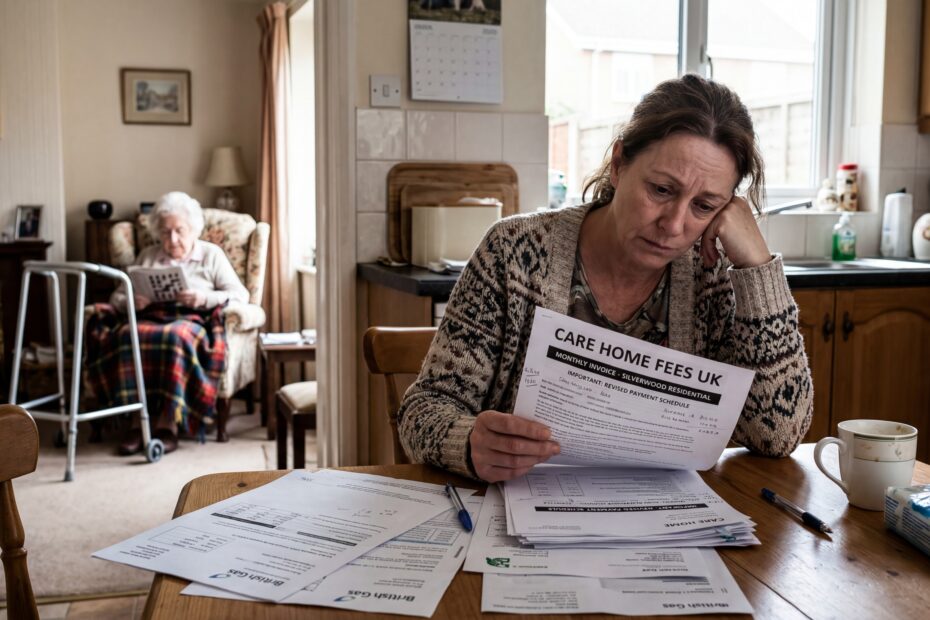
A family move made to prepare for future care needs
Naomi’s parents made a major life decision over nine years ago, moving from Oxfordshire to a village in Yorkshire to be closer to their daughter. It was a practical move designed to make future care easier and more manageable as they aged.
They left behind a home they had lived in for more than 50 years, hoping the change would provide security and stability in later life.
Sudden loss and rapidly declining health
Not long after the move, tragedy struck. Naomi’s father passed away just a year later following a late diagnosis of leukaemia.
Her mother’s health then began to deteriorate significantly during the Covid pandemic, with repeated hospital stays for pneumonia leading to severe mobility loss and increasing care needs.
🛡️ Worried About Losing Your Home to Care Fees?
Many UK homeowners don’t realise their property can be used to pay for care fees. Get free advice before a crisis hits and protect what you’ve worked your whole life for.
Request Your Free Estate Planning ReviewHow rising care home fees UK began draining savings
By late 2022, following hospital discharge planning, professional carers began supporting Naomi’s mother at home.
Since 2023, care has cost around £35,000 per year, highlighting how quickly care home fees UK can build up even when someone remains in their own home rather than entering residential care.
Over three years, the total cost has reached around £100,000, fully funded through a mix of pension income and savings, showing the real impact of long-term care home fees UK on middle-income families.
For the original story, see the full report here: Original article source
The daily reality of full-time care at home
Naomi’s mother, now 92, is fully dependent on carers for mobility and daily living. She requires assistance to be hoisted in and out of bed and cannot stand or walk independently.
Although she is being cared for in familiar surroundings, the level of support required means constant, high-cost care is unavoidable.
The financial pressure behind care home fees UK
Her mother receives a quarterly pension of around £4,000, but this only covers a fraction of ongoing costs. The remainder is drawn directly from savings.
Naomi says the biggest fear is what happens when those savings run out and how rising care home fees UK will then be covered.
At that point, the family may be forced to sell the home and consider residential care options.
The impact on family life and mental health
Before carers were brought in, Naomi was her mother’s full-time carer, stepping away from her job to provide daily support.
She has since returned to part-time work, but still manages finances, care coordination, and household responsibilities.
The ongoing stress of managing care alongside rising care home fees UK has taken a serious toll on her mental and physical health.
Why so many families face the same problem
Social care in the UK is means-tested. Anyone with assets above £23,250 is expected to fund their own care, meaning savings and property are often used to pay for long-term support.
For many middle-income families, this creates a difficult gap where they are not eligible for full public support but still face extremely high care home fees UK over time.
Millions of unpaid carers across the UK experience similar financial pressure, often reducing work or leaving employment altogether.
Calls for reform to care home fees UK
Naomi believes the system urgently needs reform to make costs more predictable and fair for families who have worked and saved throughout their lives.
Without change, many fear they will continue to see lifetime savings absorbed by escalating care home fees UK.
This is not a one-off case – why early planning matters
This is not an isolated situation. Many families across the UK face similar financial pressure when care is needed later in life.
In 2025 alone, an estimated 77,000 people were reported to have faced significant financial loss linked to long-term care costs and property sales. If Naomi’s mum had spoken to an estate planner before reaching 80, she may have been able to better understand her options and potentially protect more of her assets.
Don’t wait until it’s too late—speaking to a qualified estate planner early can help you understand how to plan ahead and manage future care home fees UK more effectively.