Skip to content
Home » News » How to Reduce Your Water Bills and Save Money at Home

How to Reduce Your Water Bills and Save Money at Home

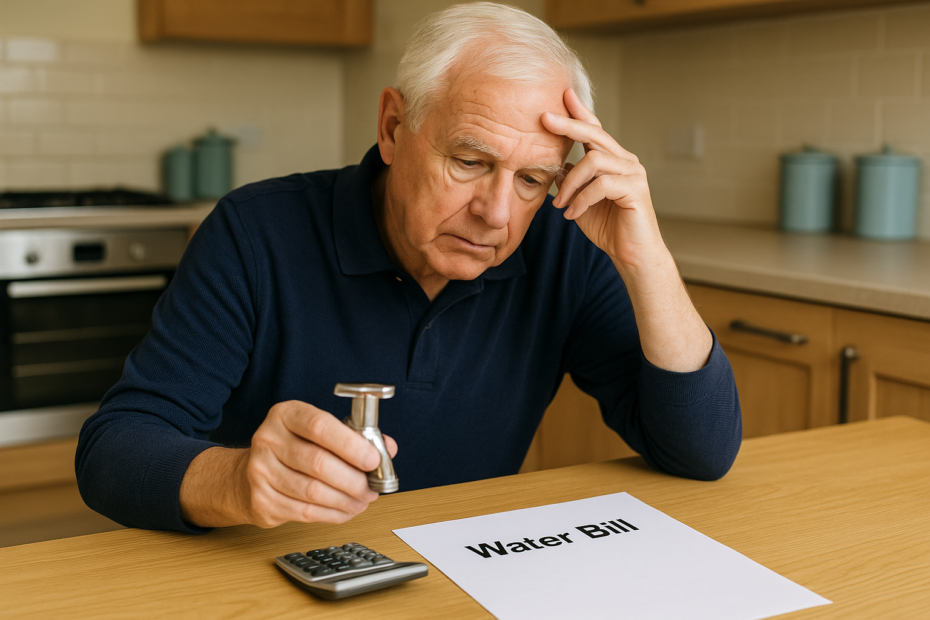
Older homeowner checking household water usage and bills at the kitchen table representing ways to reduce your water bills

Many people are surprised by how much water they use daily, and with household costs rising, learning how to reduce your water bills can make a real difference. Even though you can’t switch water suppliers, there are still many practical steps you can take to lower your water usage and save money throughout the year. From fitting a meter to simple daily habits, small changes can add up quickly.

How Are Water Bills Calculated?

Your water bill depends on whether your property uses a water meter.

If you don’t have a meter

You’re charged a set amount for water and sewage services, based on your property’s rateable value rather than how much water you actually use.

If you do have a meter

You’re billed according to the number of units of water used. All homes built since 1990 automatically have water meters fitted.

What Is Rateable Value?

Rateable value is an older system from before 1990, based on the estimated rental value of a property at that time. If your home has changed significantly since then, you may benefit from switching to a water meter instead.

A useful general rule:
If there are fewer people living in the home than there are bedrooms, a water meter could help reduce your water bills.

Practical Ways to Save Money on Water Bills

You don’t need major renovations to cut your water usage. Simple everyday habits can significantly reduce your bills.

Fix dripping taps or leaks

A leaking tap can waste half a bath’s worth of water each week. If you’re on a meter, this wasted water costs you money — so repairing leaks promptly is an easy win.

Take showers instead of baths

A short shower uses roughly one-third of the water required for a full bath. If baths are easier for you, try filling the tub partway rather than completely. A typical bath uses around 80 litres of water.

Don’t leave taps running

Turn off the tap when brushing your teeth or shaving. When washing dishes, fill a bowl rather than running the tap continuously. If you water your garden, use a watering can instead of a hosepipe to control usage.

Fit a water-saving device in your toilet

These devices reduce the amount of water used per flush and can save up to 3 litres each time. Many water companies will provide them free of charge.

Use full-load settings on washing machines and dishwashers

A single full load uses less water than two half loads, making it more efficient and cost-effective.

Are You Eligible for Water Bill Discounts?

Water companies offer a range of support schemes, including social tariffs, for people on low incomes or certain benefits. These reduced-rate schemes can make bills much more manageable if you’re struggling.

Should You Consider a Water Meter?

A water meter measures exactly how much water your household uses, ensuring you only pay for what you consume.

You might save money with a meter if:

  • You live alone

  • Your home has a high rateable value

  • You use a small amount of water

You can request a water meter for free, although the water company may refuse if installation is impractical or too costly. Tenants may need permission from their landlord.

Can You Switch Water Suppliers?

Unlike gas or electricity, you cannot switch water suppliers. Your regional water company is responsible for both water and wastewater services.

How to Make a Complaint About Your Water Service

If you’re unhappy with your water company:

  1. Start by contacting your water company and explaining the issue.

  2. If unresolved, make a formal complaint — by phone, in writing, or online.

  3. They must reply within 10 working days, and have another 10 days to resolve your complaint.

  4. If you’re still unhappy, you can escalate it to CCW, an independent service that helps resolve complaints.

Looking for ways to reduce your water bills?