Skip to content
Home » News » UK Budget 2025: What It Means for Care Fees – And Why Costs Could Rise Again

UK Budget 2025: What It Means for Care Fees – And Why Costs Could Rise Again

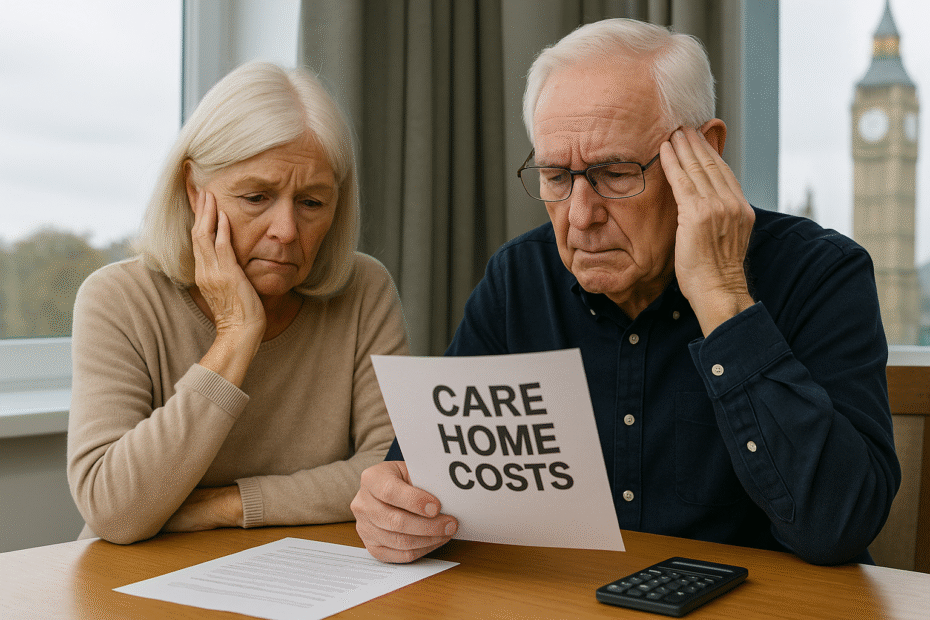
Elderly couple looking worried while reviewing rising care home costs at a table in a UK home, with Big Ben visible through the window in the background.

The latest UK Budget has raised serious concerns for older people and families, especially around how the UK Budget affects care fees for elderly homeowners. With no new funding for social care and rising financial pressure on local councils, many people fear that the cost of care could increase yet again.

Below is an easy-to-read explanation of what this means, why care fees may rise, and what families should be aware of going into 2025.

No New Funding for Care Fees – What This Means

Despite rising demand and increasing pressure on local councils, the Budget included no additional funding for:

  • Residential care homes

  • Nursing care

  • Home-care support

  • Dementia care

  • Local authority social services

This means local councils will continue to operate under extreme financial pressure. Many councils already say they cannot fund the care people need, forcing more elderly people to:

  • Pay privately for care

  • Sell assets or use savings

  • Move into debt or deferred payment plans

And for homeowners, this often means their home becomes vulnerable if they eventually require full-time care.

Why Care Fees May Increase Again

Care fees in the UK have risen sharply in the past decade — many regions now average £5,000 to £6,000 per month, with nursing care even higher.

Here’s why costs are likely to rise again:

1. Rising staffing and recruitment costs

Care providers are struggling to recruit staff. Wage increases, shift shortages, and training requirements all raise provider costs — which are passed on to residents.

2. Increased National Insurance and business costs

In the Budget, there are employer-related cost increases that care providers must absorb. When care homes face higher operational expenses, fees rise.

3. No care-fee cap — still cancelled

The previous government proposed a cap limiting how much anyone would pay for care.
This was cancelled.
This Budget did not reinstate it.
That means no limit to what an elderly person might have to pay.

4. Frozen care-funding thresholds

The financial thresholds that determine whether someone qualifies for council support have not been increased.
This means more people will be classed as “self-funders” — paying full care fees themselves, including property value.

5. Increased pressure on local councils

With no extra funding, councils say they have no choice but to:

  • Cut services

  • Tighten eligibility

  • Increase charges

These factors combined show clearly how the UK Budget affects care fees for elderly homeowners: costs are more likely to rise, and more people will be forced to pay privately.

What This Means for Older Homeowners

The ongoing lack of support means:

  • More people may lose their homes to pay for long-term care

  • Elderly homeowners will continue shouldering the full financial burden

  • Families may face uncertainty about future inheritance

  • People diagnosed with dementia or mobility issues could face extremely high lifetime costs

The Budget offers no protection, no reform, and no relief for people worried about care fees.

Why Planning Ahead Matters More Than Ever

With care fees rising and no government cap on costs, families are increasingly looking at:

  • Wills

  • Trusts

  • Tenants-in-Common arrangements

  • Lasting Powers of Attorney

  • Protective estate-planning strategies

Planning early can ensure that your home and lifetime savings are better protected if care is ever needed.

When Jessica Jones talks about what happened to her mum, she still struggles to understand how the system could take everything her …

A 98-year-old widow, Brenda Miles, has been forced to leave the care home she called home for five years — after spending …

The Hugh Kirsch Story, first published in The Guardian by Patrick Butler, Social Policy Editor, highlights one of a growing number of …

When Robert Hill, 94, from Nottinghamshire, was diagnosed with dementia, his daughter thought the NHS would help. Instead, the family was told …

Jessica Jones from Wrexham says her mother’s home was forcibly sold to pay for care fees – after a system she calls …

It’s a question that’s been asked time and time again: Why do Scottish get free care but English don’t? We all live …